
Despite our perceptions, digital isn’t aways better for the environment
AI is here to stay, but its scale, proliferation and impact – environmental and otherwise – are not inevitable.


AI’s interpretation of this prompt: A beautiful woman posing in front of Venetian waters with a man taking her picture with a phone.
Shoulders back, boobs thrust forth, a hand resting on a perfectly positioned hip, Venetian waters lap in the background. We’re in a quiet enclave of the sinking city that €25 a cocktail buys access to, and a doting male is trying to get the perfect Instagram-worthy pic of his gorgeous girlfriend. Though she doesn’t seem to like any of them. Fifteen or twenty snaps later, she settles for what I suspect is not her idea of perfect.
Looking on, my husband is incredulous. I won’t tell you exactly what he said, but let’s just say his devotion to me does not extend to taking my portrait dozens of times, so I look good online.
I often share the same incredulity, though, when he and I are debating what to do about something or other, usually in between brushing one of the kids’ teeth or what not, and he goes: “Hang on, I consulted ChatGPT. It says…”
My insides stiffen; I roll my eyes and let out an audible sigh.
Why? Well, I don’t want a chatbot’s opinion about my life choices, however minute. I am indecisive, it’s true, but very stubborn about this. That aside, I think we often forget the environmental impact of digitisation, and particularly AI.
We swapped paper documents for emails and apps and it all feels so much less impactful – there’s no rubbish to dispose of and nothing appears to have been chopped down to make it.
But that’s not strictly true. We save paper but the energy impact of digitisation and AI is not negligible - quite the opposite.
Energy hungry warehouses
Most things digital are stored either on a device or, more often than not, in the Cloud – not a magical place in the sky but an abundance of highly energy, water and land-intensive warehouses, aka data centres. More crucially, these also power and underpin AI models like Chat GPT.
Electricity consumption from data centres was estimated at about 1.5% of global electricity consumption in 2024 – but as AI adoption skyrockets, this is predicted to grow by around 15% per year to 2030.
And uptake of AI in the last few years has been nothing short of phenomenal: it has already outpaced the internet’s first decade and is increasingly used for non-work related purposes. This equals billions of queries to large-language models – Claude, ChatGPT, Grok, etc – every day.
MIT Technology Review calculated text-generating prompts—like making a travel itinerary for Istanbul—consume between 114 and 6,706 joules of energy, depending on the model and prompt. That’s roughly equivalent to running a microwave for one-tenth of a second or eight seconds, respectively.”
Cumulatively, it’s a hell of a lot. OpenAI CEO Sam Altman once said expressing gratitude to or showing consideration for the large language model has cost the company “tens of millions of dollars.”
In fact, these models require many more data centres to be built – a projected $3tn (£2.3tn) spend on datacentres – all consuming more and more energy; 85 gas-fired power facilities are in development around the world to supply them.
The drain on energy demand can cause tension in energy insecure regions. I wrote about this in Ireland, one of the first data centre hubs – the canary in the coal mine, if you will – where people are extremely peeved about the expansive data centre industry sucking up local power, pushing up the cost of energy, and compromising the nation’s climate goals. It’s estimated by 2027 data centre power needs will exceed those of all the households in Ireland.
Is it all worth it?
In the long term, we still don’t know exactly how much power AI will consume, but many argue we need to be more discerning about how we use our limited supply of electricity – especially amid the electrification of transport and other vital services.
I thought energy expert Thomas Manuel Ortiz said it well in a recent substack: “We can divert all the electrical generating capacity we have and then triple it to make sure you can ask a bot which belt goes with those shoes while another bot mows your lawn without running over your dog in the backyard.”
[He also said, which I thought was rather hilarious: “We might even see a truly Lost Generation that stares blankly at a screen hoping for guidance that will never come.” It recalled the Little Britain ‘Computer Says No’ sketch.’]

This is not to say that AI and digitisation don’t have environmental benefits – there are many applications of AI that help conserve the environment and improve energy efficiency. But you asking ChatGPT for love life advice is not one of them.
All this is to say that it’s important to be mindful that digitisation – though, in many senses, not physical to us – has a real physical environmental impact and it’s getting exponentially bigger and bigger the more we become dependent on it.
We might want to think twice about whether these companies becoming richer and richer (already in the trillions) off our data, the information we feed it and often our copyright (while sucking up vital resources, defuncting jobs, and giving Elon Musk, Jeff Besoz, Sam Altman God-like status) is really worth the exchange? Is it worth what you’re getting in return?
Sometimes it will be, many times it won’t be. I am not suggesting we shouldn’t embrace AI – it’s here to stay, as it should be – but its scale and proliferation and impact are not inevitable – this is entirely up to us and based on how we choose to use it. No matter what anyone says, the scale of this revolution and its footprint are still to be determined.
Digital detox tools
I tried to have a digital declutter. Besides deleting loads of emails and a lot of files from my desktop, I largely failed. Mostly because its so time consuming, and quite frankly, boring – a digital clear out is just not as satisfying as decluttering the house. But also, because I have an irrational fear about deleting files and documents and am too emotionally attached to the thousands of pictures I have of my kids, even if one looks basically like another taken a nanosecond later. I endeavour to conquer this irrationality, however.
I did download a ridiculously priced app (£7 a week!) called Cleanup to assist me, but quite frankly, it required more input than I cared to give. It made things quicker but not that much quicker [that’s often AI for you!].
Recommendations for better applications welcome!
Image by wirestock on Freepi
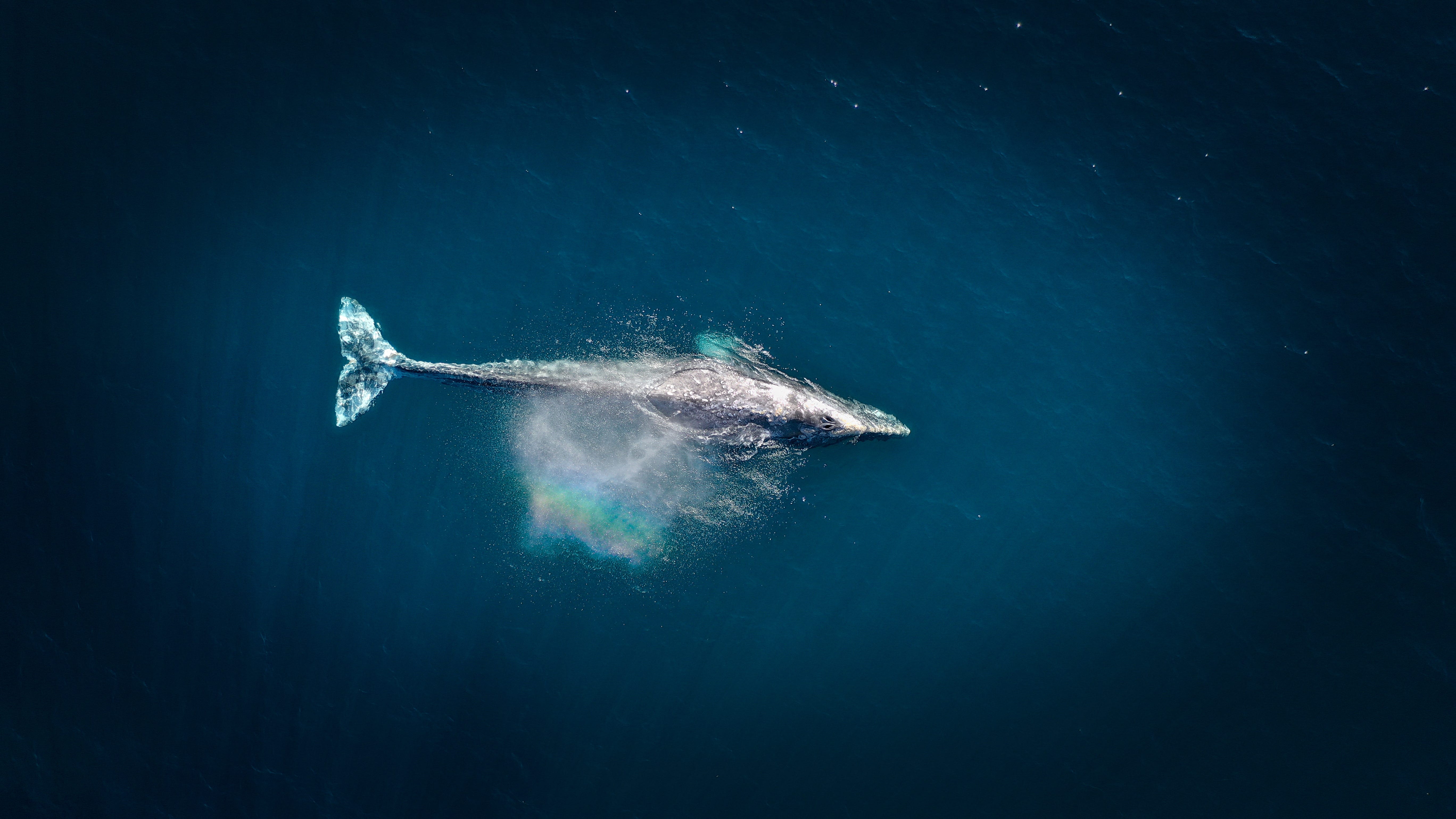
Image by wirestock on Freepik
Fun Fact…Did you know that whales store carbon? One whale can capture an average of 33 tons of carbon dioxide over its lifespan. A live oak tree, one of the most efficient carbon-capturing tree species, captures roughly 12 tons of carbon dioxide over a maximum 500-year lifespan. This is all according to US gov agency NOAA – check it out before it gets deleted in Trumps anti-climate change administration.
The Good: Thanks to a rapid roll out of renewables and electric vehicles China’s carbon emissions have been flat or falling for 18 months – a huge achievement for an industrial nation with a population of nearly 1.5 billion.
The Bad: The world is now likely to exceed 1.5 degrees of warming – the level at which scientists believe many of the deadliest effects of climate change are reduced. The BBC has a good explainer on this here. The UN’s recent emissions gap report finds that global warming projections over this century, based on current policies are 2.8°C – an overshoot of the 2 degree Paris Agreement target.
Resource of the Month: I interviewed Thomas Manuel Ortiz a short while ago and am now enjoying reading his Substack on the complexities of going green, of which there are many.
What people are saying: When Rachel Kyte, the UK’s Special Representative for Climate, on Bloomberg’s excellent Zero podcast, was asked: Why would we go to Brazil and discuss investing in the Amazon and other tropical forests?
She said: “If we lose them, we lose control over the thermostat of the planet…from a British perspective, if we lose the tropical forests and their integrity, our own food security is going to be massively disrupted.”
Your exploration of digital's enviromental footprint is brilliant, something I frequently consider when choosing between physical books and e-readers. How do you foresee AI's increasing computational demands impacting this balance?